See how both scenarios more divorce the patient from choice and from the doctor or other care entities?Free market principles have not failed health care, but healthcare Click for info hasn't been permitted to naturally make use of the free enterprise in practically a century. (Not too remarkably, due to federal and state federal government laws and policies, lots of elements of the health care community have been manipulated, cancelled or downright forbidden.
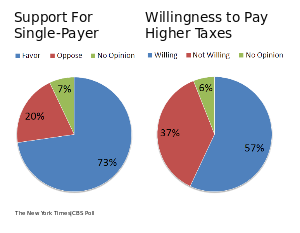
How can an individual pick on their own if federal government and 3rd parties are paying? They can't. There's the rub for all who promote interacted socially medicine, federal government single-payer, employer based health insurance, or anything however the first-party deal of the client picking and paying the caretaker directly. So "healthcare"- all the markets, interests, services and products that make up the ecosystem-must be permitted by government to embrace the efficiency and fairness of the free enterprise.
The free market responds to wants and needs by supplying these goods and services with impressive quality, effectiveness and numerous rate choices. Quality increases and rate boils down through free enterprise competition, not government order. All clients, federal governments, and all of, so-called, "healthcare," would gain from direct free market competitors.
So, let's not utilize the word "health care," as it is far too broad. Individuals keep getting it confused with insurance "coverage." There's health insurance, which should be called illness insurance coverage. And medical care, which is what doctors do. Individuals have to be accountable to look after their own health with their own unique value systems.
We depend on marketing to assist money our acclaimed journalism. We prompt you to switch off your advertisement blocker for The Telegraph site so that you can continue to access our quality content in the future. Thank you for your assistance.
How Does Canadian Health Care Work - Questions
HEALTH SYSTEM: all the activities whose main function is to promote, bring back or maintain health (The World Health Report 2000 Health systems: improving performance) MEANINGS FROM THE WHO GLOSSARY OF TERMS (available at: http://www. wpro.who. int/chips/chip04/ meanings. htm). A medical facility that provides a variety of various services for patients of different age and with varying illness conditions.
A medical facility at the very first referral level that is accountable for a district or a specified geographical location containing a defined population and governed by a politico-administrative company such as a district health management group. The function of district medical facilities in main health care has actually been broadened beyond being dominantly curative and rehabilitative to consist of advertising, preventive, and instructional functions as part of a primary health-care approach.
A centre that provides services which are typically the very first point of contact with a health expert. They include services offered by family doctors, dental professionals, community nurses, pharmacists and midwives, to name a few. All graduates of any faculty or school of medicine, really operating in the nation in any medical field (practice, mentor, administration, research, lab, etc.).
The individual may or may not have prior nursing education. All persons who have actually completed a program of standard nursing education and are certified and registered or authorized to offer responsible and competent service for the promo of health, avoidance of health problem, the care of the ill, and rehab, and are in fact operating in the country (how does electronic health records improve patient care).
All graduates of any professors or school of dentistry, odontology or stomatology, really operating in the country in any dental field. All employees who respond to the national definition of health-care suppliers and are neither physicians/doctors, midwives, nurses, pharmacists, or dental professionals. Inpatient. An individual who is formally admitted to a health-care facility and who is discharged after several days.
Some Known Factual Statements About How To Get Health Care
A person who goes to a health-care center for a consultation, and who leaves the center within 3 hours of the start of consultation. An outpatient is not formally admitted to the center. DEFINITIONS FROM THE EUROPEAN OBSERVATORY ON HEALTH SYSTEMS AND POLICIES (available at http://www. euro.who. int/observatory/Glossary/ TopPage?phrase =D) Ambulatory care. All kinds of health services provided to patients who are not restricted to an institutional bed as inpatients throughout the time services are rendered (USAID, 1999).
Ambulatory care services are provided in lots of settings ranging from doctors' offices to freestanding ambulatory surgical facilities or heart catheterization centres. In some applications, the term does not consist of emergency situation services offered in tertiary medical facilities (USAID, 1999). Daycare. Medical and paramedical services provided to clients who are officially admitted for diagnosis, treatment or other kinds of healthcare with the intention of releasing the client the exact same day.
Long-lasting care incorporates a broad range of aid with day-to-day activities that chronically disabled individuals need for a prolonged time period. Long-term care is Check out the post right here mostly interested in preserving or improving the capability of elderly individuals with impairments to function as separately as possible for as long as possible; it likewise encompasses social and environmental requirements and is therefore wider than the medical design that http://daltonyniv451.jigsy.com/entries/general/what-does-what-is-trump-doing-about-health-care-mean- dominates acute care; it is mostly low-tech, although it has ended up being more complex as elderly individuals with complex medical needs are discharged to, or stay in, standard long-term care settings, including their own homes; services and real estate are both important to the advancement of long-lasting care policy and systems.
Social care. Services associated to long-lasting inpatient care plus community care services, such as day care centres and social services for the chronically ill, the senior and other groups with unique requirements such as the mentally ill, psychologically disabled, and the physically handicapped. The borderline in between health care and social care varies from country to country, specifically concerning social services which include a significant, but not dominant, health-care element such as, for instance, long-lasting care for dependent older individuals.
To guarantee healthcare protection for everyone in the United States through a foundation of thorough and longitudinal medical care. The intent of this policy file is to give the American Academy of Household Physicians (AAFP) and its Board of Directors the required advocacy flexibility to think about all alternatives that may come before federal and state governments and the American individuals in working to achieve the goal of healthcare protection for all an objective based upon AAFP policy which acknowledges that health is a fundamental human right for each individual which the right to health consists of universal access to timely, acceptable and budget friendly health care of appropriate quality.
About When Is Health Care Vote
Healthcare expenses continue to increase at an unsustainable rate and quality is far from ideal. i, ii Over the past two years, policies executed through the Children's Health Insurance Program (CHIP) and the Patient Protection and Affordable Care Act (ACA) have actually extended access to economical health care protection to countless formerly uninsured, non-Medicare eligible adults and kids.

8% under the implementation of these policies. iii The best gains in protection have taken place among our most susceptible populations and young grownups. Nevertheless, the rollback of some provisions of these policies has increased the percentage of those uninsured to 15. 5%, iv near to what it was one decade earlier when our uninsured rate was nearing 17%, with almost 50 million people uninsured.